EN
Jul. 21, 2026
I. Background
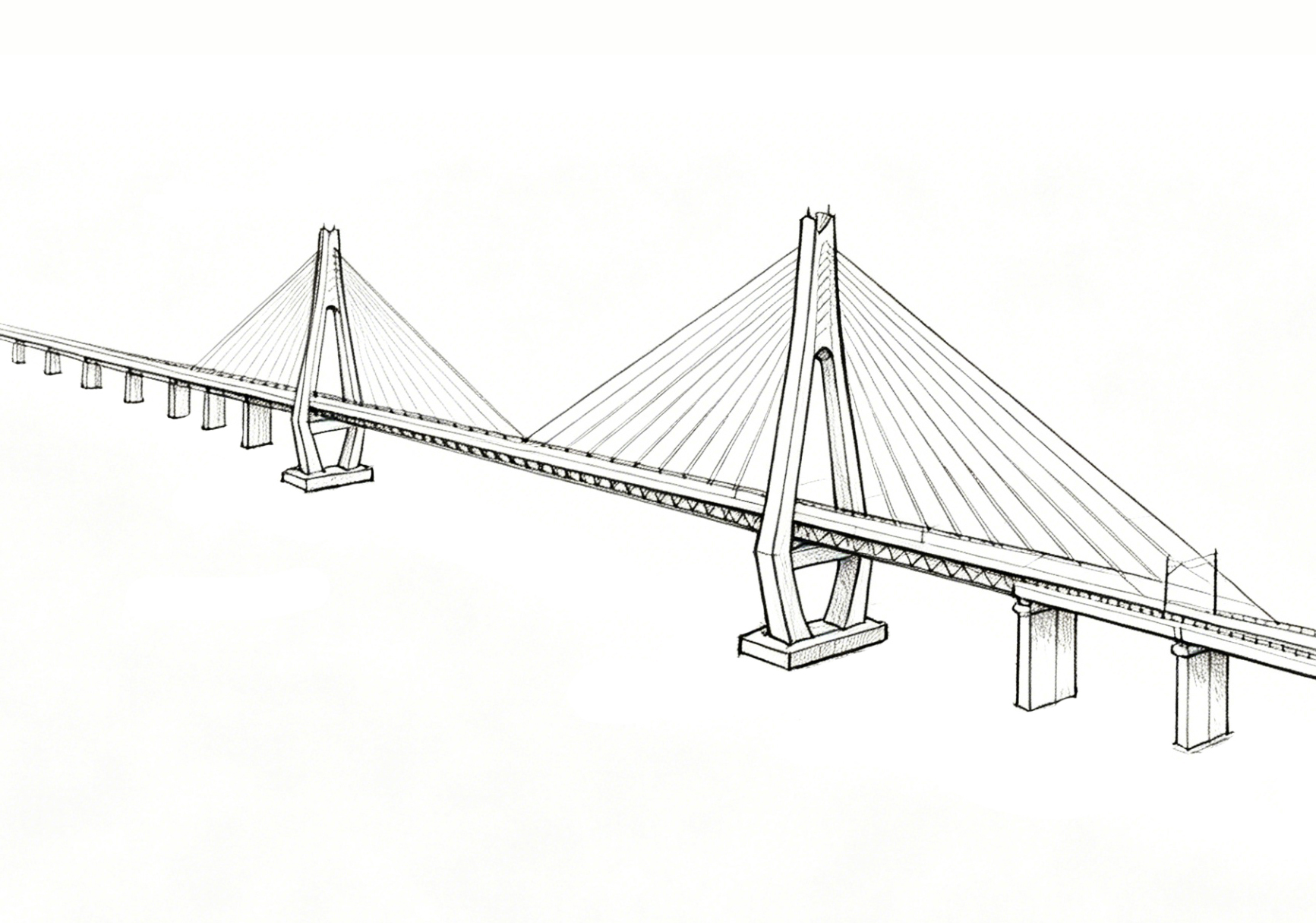
The construction of cross-river and cross-sea bridges, high-pier bridges in mountainous areas, and urban viaducts is currently accelerating, leading to the widespread use of ultra-high-strength steel strands (with tensile strengths of 2000 MPa or higher) in cable-stayed systems and external prestressing structures.
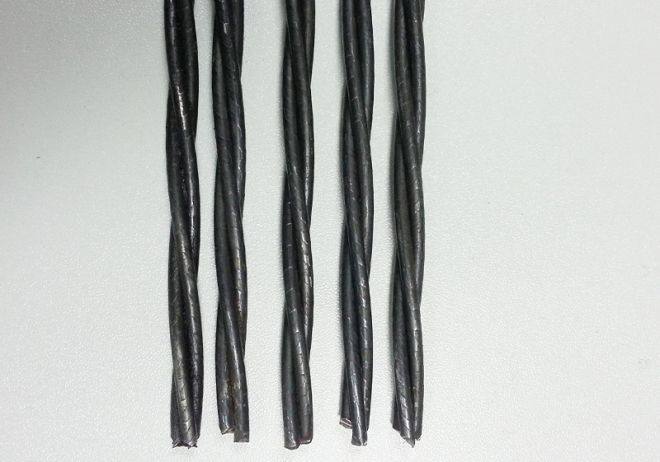
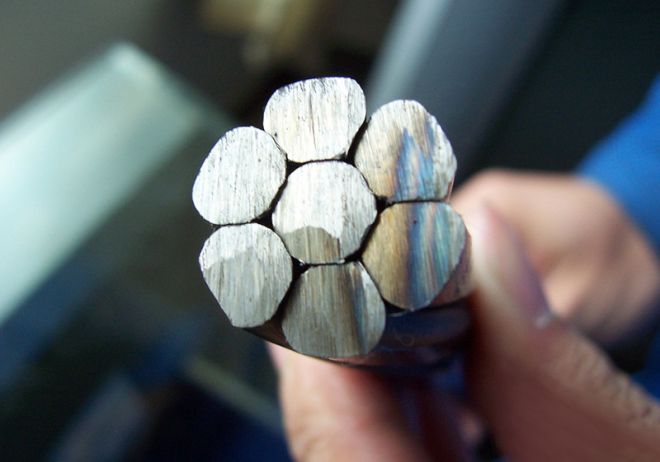
To better regulate the manufacturing and application of these ultra-high-strength steel strands, the China Association for Engineering Construction Standardization (CECS) formulated and issued T/CECS 10488-2025, "High Strength Steel Strand for Bridge Engineering." Released on August 18, 2025, and effective from January 1, 2026, this is the first domestic group standard dedicated to ultra-high-strength steel strands for bridges; it specifically governs the production and inspection of 1×7 structure high-strength steel strands with a characteristic tensile strength of no less than 2000 MPa.
II. Detailed Standards
1. Unified Standardized Marking
A fixed marking format is established: Product Name – Structural Code – Nominal Diameter – Standard Tensile Strength Value – Standard Number (e.g., "High Strength Steel Strand – 1×7-15.20-2160-T/CECS 10488-2025"). This unifies identification across design, production, construction, and supervision parties, resolving issues such as inconsistent specification labeling and difficulties in identification during acceptance inspections.
2. Source-level Controls on Raw Materials and Manufacturing Processes
The standard establishes mandatory requirements for raw materials and production procedures: wire rods used for strand production must comply with relevant national standards; following the stranding process, the strands must undergo stabilization heat treatment under a tensile force equivalent to 60%–80% of their rated tensile strength, with the lay length controlled at 12–16 times the nominal diameter; finished products may only be cut using abrasive saws, and cutting via electric welding is strictly prohibited.
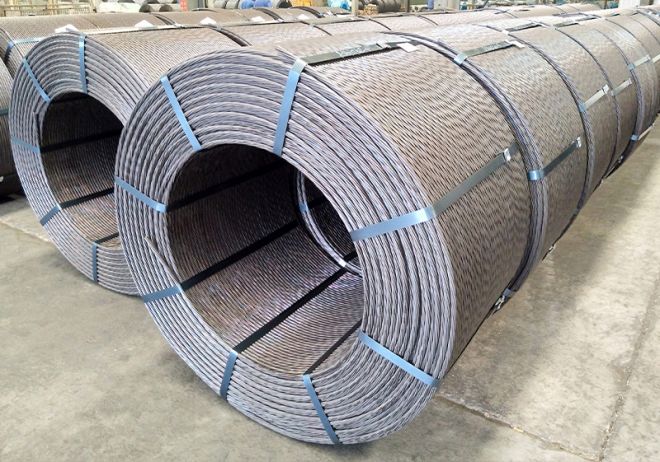
Additionally, specifications mandate a coil weight of 1,000–4,000 kg and an inner coil diameter of at least 800 mm to prevent defects such as wire unraveling or inadequate relaxation performance during production.
3. Requirements for Basic Appearance, Dimensions, and Straightness
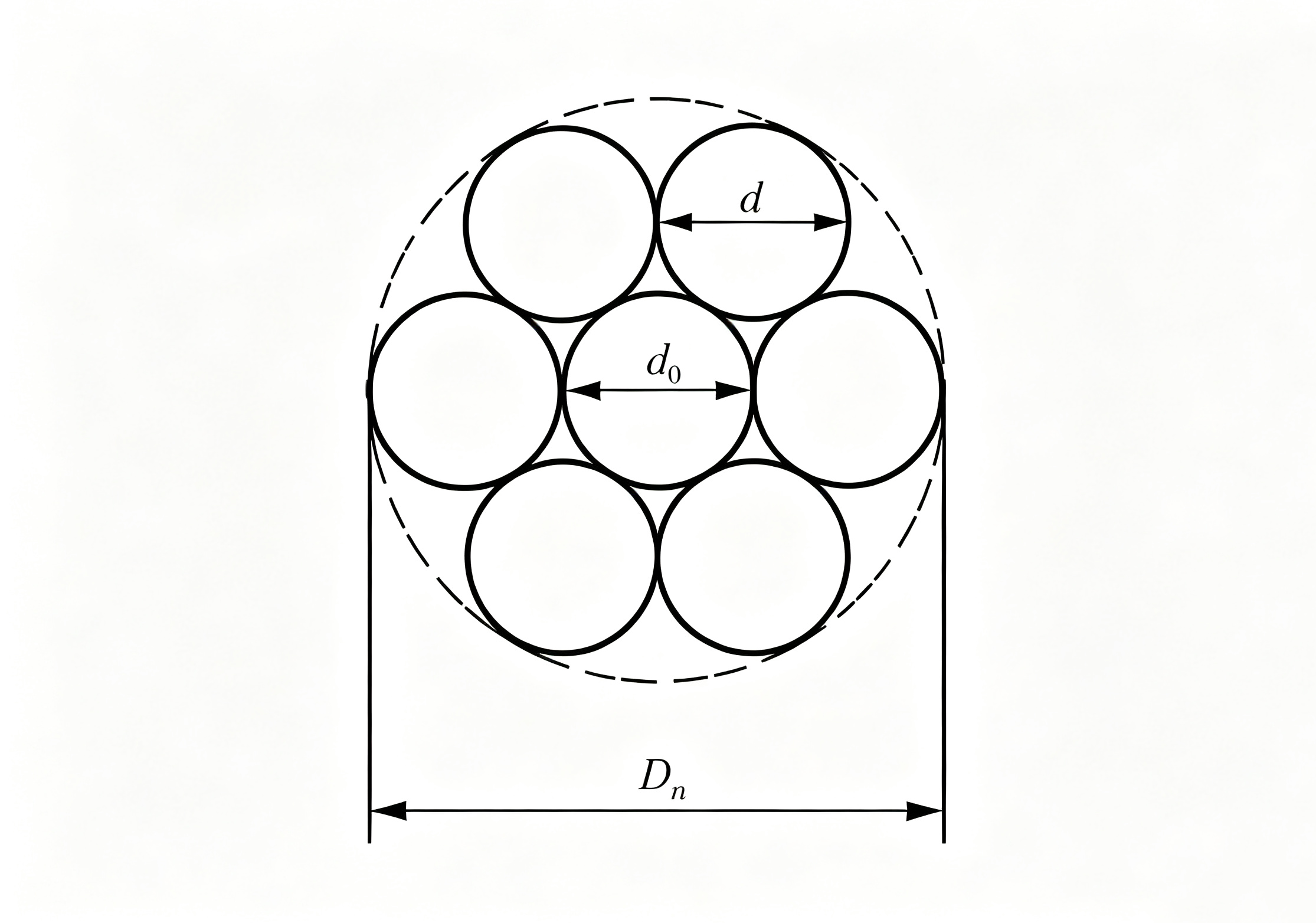
The standard retains only the two specifications most widely used in engineering: 15.20 mm and 15.70 mm. While slight surface rust is permissible, the material must be free of pitting corrosion; when a 1-meter length of steel strand is laid flat on a level surface, the sag (sagitta) must not exceed 15 mm to avoid the generation of additional stresses during tensioning.
Table 1 Dimensions, Permissible Deviations, Nominal Cross-sectional Area and Theoretical Mass per Meter
Nominal Diameter Dn /mm | Permissible Diameter Deviation /mm | Nominal Cross-sectional Area Sn /mm2 | Theoretical Mass per Meter / g/m | Enlargement Range of Central Wire Diameter d0 /% |
15.20 | +0.40 -0.15 | 140 | 1101 | ≥2.5 |
15.70 | 150 | 1178 | ||
Note: The density of steel is taken as 7850kg/m3 when calculating the theoretical weight per meter of high-strength steel strand. | ||||
4. Standardized Packaging, Storage, and Transport Protection
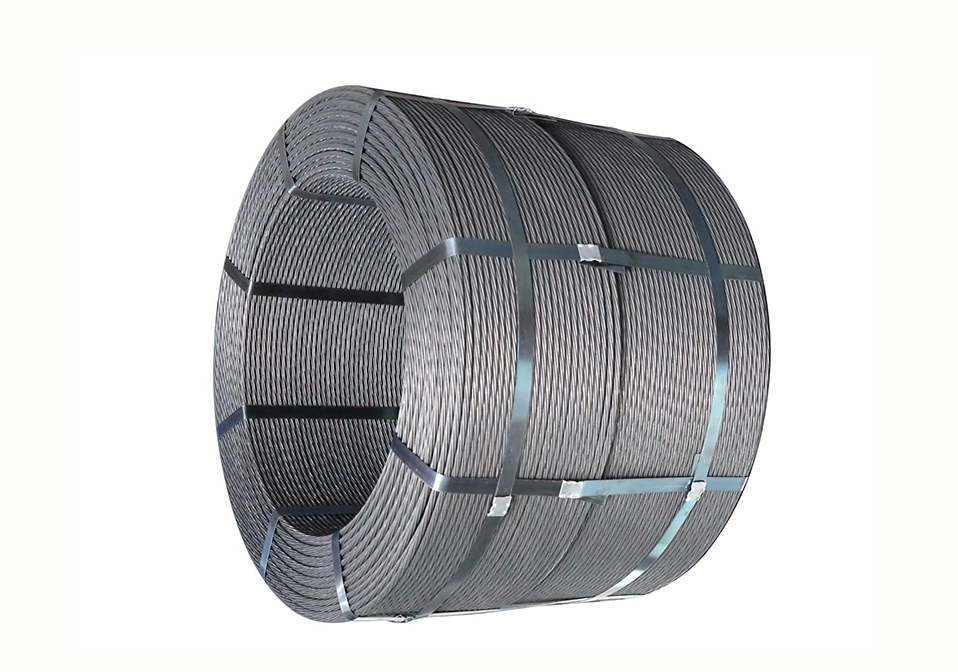
Each coil of steel strand must be secured with at least six binding straps and wrapped in rainproof and moisture-proof packaging.
A tag indicating specifications, strength, batch number, and other details must be attached to the coil, and a complete quality certificate must accompany each batch. Waterproof and anti-rust measures must be maintained throughout transport and storage; bending or impact is strictly prohibited to prevent any degradation of the strand's mechanical properties during handling.
III. Core Technical Advantages
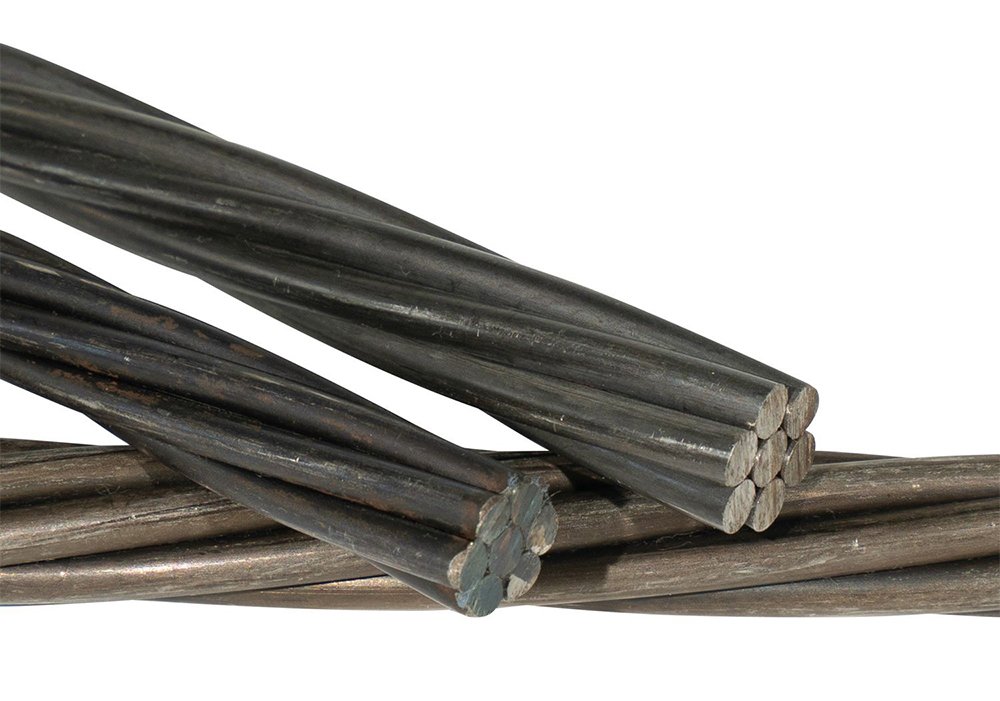
Compared to the general national standard, the most significant innovation of this standard lies in distinguishing between standard bridge components and stay-cable applications, while comprehensively tightening durability requirements:
1. Comprehensive Ultra-high-strength Product Range: It covers nine strength grades spanning 2000 MPa to 2460 MPa, filling the gap for the 2400 MPa and 2460 MPa grades, and mandates a uniform total elongation at maximum force of ≥3.5%.
Elastic modulus is controlled via graded specifications, with stricter precision requirements for ultra-high-strength products rated at 2200 MPa and above;
the 0.2% yield force is limited to 88%–95% of the actual maximum force; and the 1,000-hour stress relaxation limit for 2230 MPa grade steel strands is explicitly defined to control long-term prestress loss.
Table 2 Mechanical Properties of High-Strength Steel Strand
Characteristic Tensile Strength /MPa | Nominal Diameter of Steel Strand Dn /mm | Maximum Force Fm of Whole Strand /kN | Maximum Value of Maximum Force Fm,max of Whole Strand /kN | Total Elongation at Maximum Force Agt(L0≥500mm) /% | Stress Relaxation Performance | |
Percentage of Initial Load to Actual Maximum Force /% | 1000h Stress Relaxation Rate r/% | |||||
2000 | 15.20 | ≥280 | ≤308 | ≥3.5 | 70
80 | ≤2.5
≤4.5 |
15.70 | ≥300 | ≤330 | ≥3.5 | |||
2100 | 15.20 | ≥294 | ≤322 | ≥3.5 | ||
15.70 | ≥315 | ≤345 | ≥3.5 | |||
2160 | 15.20 | ≥302 | ≤330 | ≥3.5 | ||
15.70 | ≥324 | ≤354 | ≥3.5 | |||
2200 | 15.20 | ≥308 | ≤336 | ≥3.5 | ||
15.70 | ≥330 | ≤360 | ≥3.5 | |||
2230 | 15.20 | ≥312 | ≤340 | ≥3.5 | ||
15.70 | ≥335 | ≤365 | ≥3.5 | |||
2300 | 15.20 | ≥322 | ≤350 | ≥3.5 | ||
15.70 | ≥345 | ≤375 | ≥3.5 | |||
2360 | 15.20 | ≥330 | ≤358 | ≥3.5 | ||
15.70 | ≥354 | ≤384 | ≥3.5 | |||
2400 | 15.20 | ≥336 | ≤364 | ≥3.5 | ||
15.70 | ≥360 | ≤390 | ≥3.5 | |||
2460 | 15.20 | ≥344 | ≤372 | ≥3.5 | ||
15.70 | ≥369 | ≤399 | ≥3.5 | |||
Note: Unless otherwise specified, the relaxation test with initial load equal to 70% of actual maximum force Fm may be carried out only. The extrapolation method is permitted for 120h relaxation test to determine the 1000h relaxation rate. | ||||||
2. Tiered Fatigue Performance: Products must withstand 2 million load cycles without fracture; the stress amplitude is set at 200 MPa for standard components and raised to 300 MPa for specialized bridge cable strands to accommodate cyclic vehicle loads.
3. Differentiated Stress Corrosion Assessment: Test durations are determined based on strength levels, simulating corrosive environments found in coastal and mountainous regions to ensure long-term operational safety.
IV. Standardized Testing and Inspection/Qualification System
All testing operations strictly adhere to the GB/T 21839 standard, with detailed protocols established for dimensional, tensile, relaxation, and fatigue tests. For factory acceptance inspections, the 1,000-hour relaxation rate may be extrapolated from 120-hour test data, balancing testing efficiency with data reliability.
1. Factory Batch Inspection: Each inspection batch shall not exceed 100 tonnes. Surface quality and dimensions are inspected for every coil, while three specimens per batch are sampled for mechanical property testing. If a single parameter fails, double sampling and re-testing are permitted; however, if the re-test also fails, the entire batch is prohibited from leaving the factory.
2. Type Qualification Inspection: This inspection is mandatory for scenarios such as the finalization of new product designs, significant process adjustments, scheduled biennial testing, and the resumption of production after a six-month hiatus. In addition to routine parameters, three durability tests—fatigue, deviated tensile, and stress corrosion—are required. Failure to pass the re-test for any durability parameter results in the immediate rejection of the batch, thereby upholding the safety baseline for materials used in major bridge projects.
Summary
The implementation of this standard delivers significant value to the industry in several ways: First, it fills a gap in specialized standards for ultra-high-strength steel strands used in bridges, addresses deficiencies in durability control regarding dynamic loads and corrosive conditions, and establishes a standardized basis for the application of cable materials. Second, the comprehensive ultra-high-strength specification system facilitates bridge lightweighting and promotes the substitution of imported cable materials with domestic alternatives. Third, it establishes a full-chain control system—covering raw materials, production, testing, and storage/transport—that unifies industry acceptance criteria and reduces project-related disputes. Fourth, stringent durability requirements significantly enhance the safety margins of bridge prestressing systems and extend the service life of bridges.
Upon its implementation in January 2026, the standard will be applied across all types of bridge projects nationwide, leveraging standardization to improve construction quality and foster the high-quality, sustainable development of the long-span bridge industry.
Outlook for the Prestressed Steel Strand Industry
Analysis of the Rise in Plastic and Chemical Raw Material Prices?
HOT PRODUCTS

Yuanxian High-tech Material is a company serving a worldwide customers base providing innovative and reliable product solution that recognizes the value of customer care.
+86 180 2006 1362
Haitai Huake Third Road No.1, Huayuan Industrial Zone, Binhai High Tech Zone, Tianjin, china
Quick Links
Product Category

Request a Quote
Welcome to subscribe toour email message!

Send a Message